


Berlin, Germany, January 2026 — When the German Federal Network Agency announced that renewable energy generation would cover 65% of the country's total electricity consumption for the first time by 2025, many German households felt not only pride but also a sense of urgency. Electricity prices remain high, and grid stability faces challenges due to extreme weather and the pains of transition. More and more households are beginning to seriously consider: how much investment is needed to install their own solar storage system? What is the economic calculation behind this?
Market Background: From "Green Sentiment" to "Economic Necessity"
In the past, installing solar power was seen as an environmental sentiment. Today, with the average household electricity price in Germany consistently exceeding 31 euro cents per kilowatt-hour, it has evolved into a savvy financial decision. According to data from the German Solar Energy Industry Association, in 2024, more than 400,000 new photovoltaic storage systems were installed in German homes, bringing the total market stock to over 1.66 million units.
The driving forces are evident: On the one hand, the German government continues to simplify approval processes through the "Solar Acceleration Package" and provides direct subsidies for energy storage equipment配套 with photovoltaics, such as Berlin's "SolarPLUS" program, which can subsidize up to 30% of the cost of energy storage systems. On the other hand, market education is maturing, and consumers deeply understand that energy independence not only protects against electricity price fluctuations but also provides a safety net for core household electricity needs (such as internet, refrigerators, and medical equipment) during frequent storms and grid maintenance.
Cost Breakdown: Modular Investment, Flexible Options
The cost of a "system" is not a fixed figure but depends on the family's needs, roof conditions, and investment goals. Generally speaking, the investment in a complete photovoltaic energy storage system consists of three main parts:
Photovoltaic Modules: Approximately 50-60% of the total investment. A 5-8 kWp rooftop photovoltaic system that meets most of the electricity needs of a typical four-person household currently costs approximately €6,000 to €12,000.
Energy Storage Battery System: Approximately 30-40% of the total investment. This is key to achieving "electricity freedom," with cost directly linked to capacity.
Installation and grid connection: Approximately 10-15% of the total investment, around €1,500 to €3,000, ensuring safe and compliant system operation.
Therefore, a classic "PV + energy storage" combination typically costs between €12,000 and €25,000. However, for many families living in city apartments or wishing to start with a lower barrier to entry, the market offers more flexible options, which is precisely where innovation lies.
Solution Overview: From Balcony Energy Storage to Whole-House Backup Power
To meet diverse needs, PurMars Power offers a full range of products, from portable to fixed, from entry-level to high-end, allowing every family to find a suitable starting point for energy independence.
Solution 1: Balcony PV Energy Storage – An "Energy Revolution" for Apartment Users
For millions of apartment dwellers without independent rooftops, balcony PV energy storage systems are the optimal solution for participating in the energy transition. For example, PurMars Power's H5000 balcony energy storage system is becoming a popular choice in the German market.
Key Advantages: It integrates 5 kW AC output and 5 kWh of energy storage capacity, using safe and long-life lithium iron phosphate batteries with a cycle life exceeding 3000 cycles. Its compact design is optimized for balcony or small wall-mounted installations.
Cost-Effectiveness: The total investment for such a system (including 1-2 balcony solar panels) can be controlled between €4,000 and €8,000. Combined with special subsidies from various German states (such as Berlin's subsidy of up to €300 per kWh for energy storage), the actual expenditure is even lower. It can easily cover a household's base load electricity consumption, such as lighting, refrigerator, internet, and entertainment equipment, achieving electricity bill savings of up to 30-50%.
Option Two: Portable Energy Storage Station – A Flexible and Mobile "Energy Swiss Army Knife"
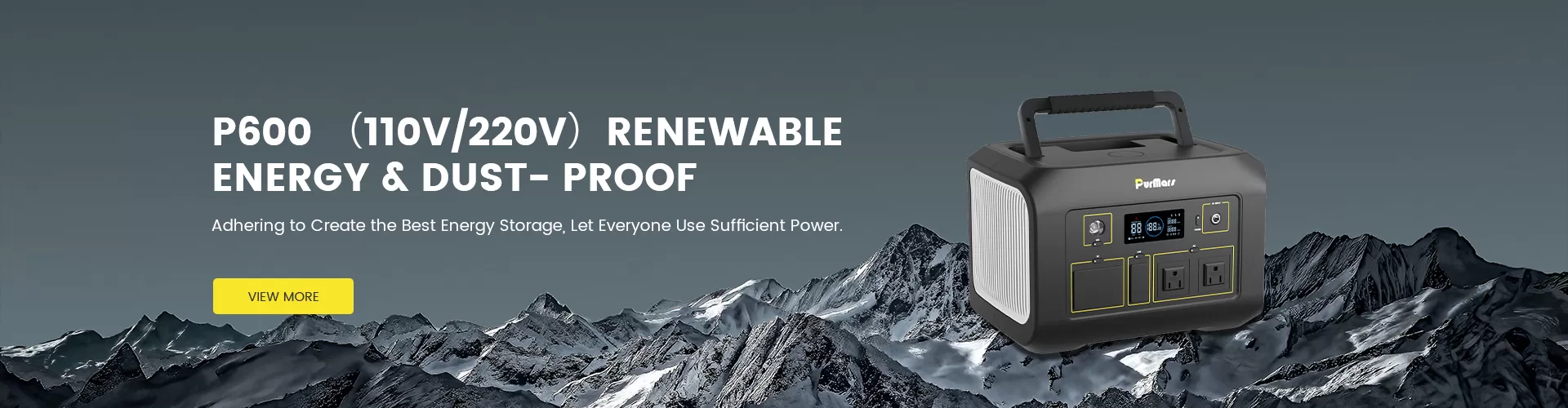
For households with flexible electricity needs or those wishing to supplement emergency capacity, a high-power portable energy storage station is ideal. PurMars Power offers a full range of products from 100W to 2400W.
Key Advantages: These systems are plug-and-play, silent, and zero-emission, featuring multiple interfaces including AC output, DC car charger, and USB, capable of directly powering a wide range of devices from coffee makers to small gadgets.
Application Scenarios: Whether used in conjunction with balcony solar panels for nighttime electricity supplementation, providing clean power for camping, backyard work, or providing uninterrupted power to critical equipment during power outages, they excel in all these scenarios. A 2000W portable power station requires an investment of just over a thousand euros, making it a highly cost-effective emergency backup option.
Option Three: Whole-House Energy Storage System – The “Energy Cornerstone” for Detached Houses
For detached houses seeking high energy self-sufficiency, a whole-house energy storage system of 10kWh or more, compatible with large rooftop solar panels, is the ultimate solution.
Key Advantages: PurMars Power utilizes H5000 modular technology, supporting flexible system expansion. Such systems achieve over 70% self-consumption rate, enabling peak-valley arbitrage through intelligent management and ensuring basic operation of the entire house for several days during grid outages.
Long-Term Value: Despite the high initial investment (over €15,000), the electricity cost savings and potential revenue from the sale of surplus electricity over its 25-year lifespan generate substantial long-term returns.
Benefit Analysis: A Calculated Future Investment
Evaluating this investment cannot be based solely on the initial price. Consider a typical household with a 5kWp solar PV system and 10kWh of energy storage:
Annual Power Generation Revenue: The system generates approximately 4,750 kWh annually.
Electricity Cost Savings: Assuming 80% self-consumption, a saving of €0.31 per kWh translates to approximately €1,178 in annual electricity cost savings.
Surplus Electricity Sold to the Grid: Selling the surplus 20% of electricity at the grid price (approximately €0.08/kWh) yields an annual revenue of approximately €76.
Total Annual Revenue: Approximately €1,254.
With a 30% energy storage subsidy, the net investment for the system is approximately €17,500, with a static payback period of approximately 14 years. Considering the average annual increase of approximately 5% in German electricity prices, the actual payback period will be significantly shortened. More importantly, the near-zero energy costs over the system's more than 20-year lifespan will provide families with a substantial financial buffer and security.
Action Guide: How to Take the First Step
Demand Assessment: Analyze your household's annual electricity bills and usage habits to determine whether you prioritize fully independent systems or critical load backup.
Solutions and Budget: Determine the appropriate solution (balcony/portable/whole-house) based on your housing type (apartment/detached house) and use an online calculator for a preliminary estimate.
Subsidy Inquiry: Visit your local municipal government website to check the latest solar and energy storage subsidy policies (e.g., Berlin SolarPLUS, North Rhine-Westphalia "progres.nrw", etc.).
Choosing a Partner: Selecting a supplier with deep ODM/OEM capabilities, such as PurMars Power, is crucial. We not only provide products that meet stringent German standards such as CE and VDE-AR-E 2510-50, but also collaborate with local installers to offer customized hardware and software solutions based on your specific house structure and grid conditions, ensuring the long-term, efficient, and safe operation of your system.
In an era of energy uncertainty, investing in a home solar energy storage system is purchasing a measure of certainty for your family's future. It's no longer just a few panels on the roof or batteries in the corners, but a smart energy hub that enables a family to move towards a resilient, autonomous, and sustainable lifestyle.
About PurMars Power:
PurMars Power is a leading global provider of clean energy solutions, focusing on innovative products ranging from portable energy storage to whole-house energy storage systems for homes, outdoor spaces, and professional applications. We are committed to helping users worldwide achieve energy independence through reliable technology and flexible customization services.
Learn more and contact us:
Explore our portable energy storage product line: https://www.purmarspower.com/portable-power-stations/.html
Learn about the H5000 Balcony Energy Storage System: https://www.purmarspower.com/5kw/h5000-balcony-energy-storage.html
Get customized solution consultation and quote.


